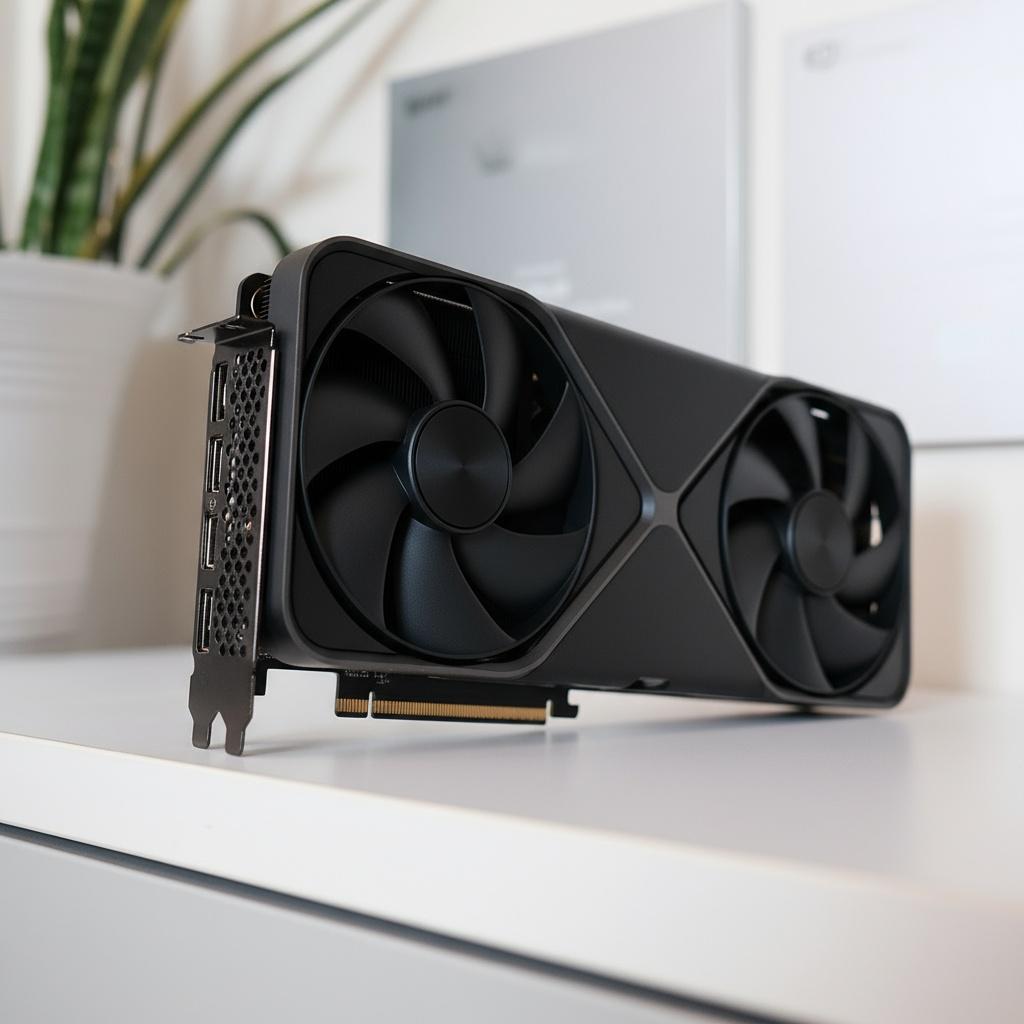
The Nvidia RTX 5090 Founders Edition has quickly become infamous in the tech community, particularly among repair experts and hardware enthusiasts. Its innovative but controversial design incorporates a fragile, proprietary internal connector that makes the card exceptionally difficult—and risky—to repair. This flaw has led many technicians to label it one of the worst GPU designs in recent memory, raising concerns over its durability and serviceability, especially for those needing to modify or water-cool their GPUs.
Unconventional Dual-Board Design
Unlike typical single PCB graphics cards, the RTX 5090 Founders Edition features a dual-board layout. One main board holds the GPU, memory, and power delivery components, while a secondary board houses the PCIe interface. These two boards are connected internally by a rigid, mini PCIe-style connector rather than a flexible ribbon cable.
This connector system, while innovative in theory, has been widely criticized for fragility. Repair professionals warn that the connector is extremely susceptible to breaking during disassembly or reassembly. Unlike more traditional designs, this connector lacks any available replacement parts, turning a common repair or upgrade task into a potential death sentence for the card.
Repair Challenges and Risks
Installation of aftermarket cooling solutions such as water blocks—a common practice for enthusiasts aiming to optimize temperature and performance—has proven particularly problematic. Experienced technicians have repeatedly encountered damaged connectors caused by handling during such modifications.
Because there is no replacement connector available, breakage results in a card that is effectively irreparable. This issue is compounded by the card’s heavy and complex construction, which increases the chances of accidental damage.
Community and Expert Warnings
Repair specialists, such as those from reputed shops, have voiced strong warnings against purchasing the Founders Edition for anyone planning to open or mod their GPU. The general consensus is that the design flaw introduces a significant point of failure, making the RTX 5090 FE inappropriate for enthusiasts wanting long-term usability or customization.
Industry observers have summarized the situation as “asking for trouble” when combining a heavy, high-power GPU with such a delicate internal joint. The rarity of replacement parts essentially guarantees that any minor mishap during servicing will render the card unusable.
Implications for High-End GPU Design
This controversy highlights an ongoing tension in modern electronics design between innovation, compactness, and repairability. While manufacturers push for cutting-edge performance and unique engineering solutions, the RTX 5090 FE demonstrates how complicated internal designs can drastically undermine product longevity and user autonomy.
Consumers and enthusiasts are increasingly demanding better repair options and modularity, and this design misstep could influence future expectations and standards in GPU manufacturing.
Conclusion
The Nvidia RTX 5090 Founders Edition stands out not just for its cutting-edge performance but also for its highly problematic internal design. With a fragile, irreplaceable connector linking its two main boards, the card faces justified criticism for poor repairability and durability. For users who plan to modify, service, or water-cool their GPUs, this model presents considerable risks and is widely advised against by repair experts. This serves as a cautionary tale about the trade-offs between innovative hardware designs and their practical implications in real-world maintenance and longevity.