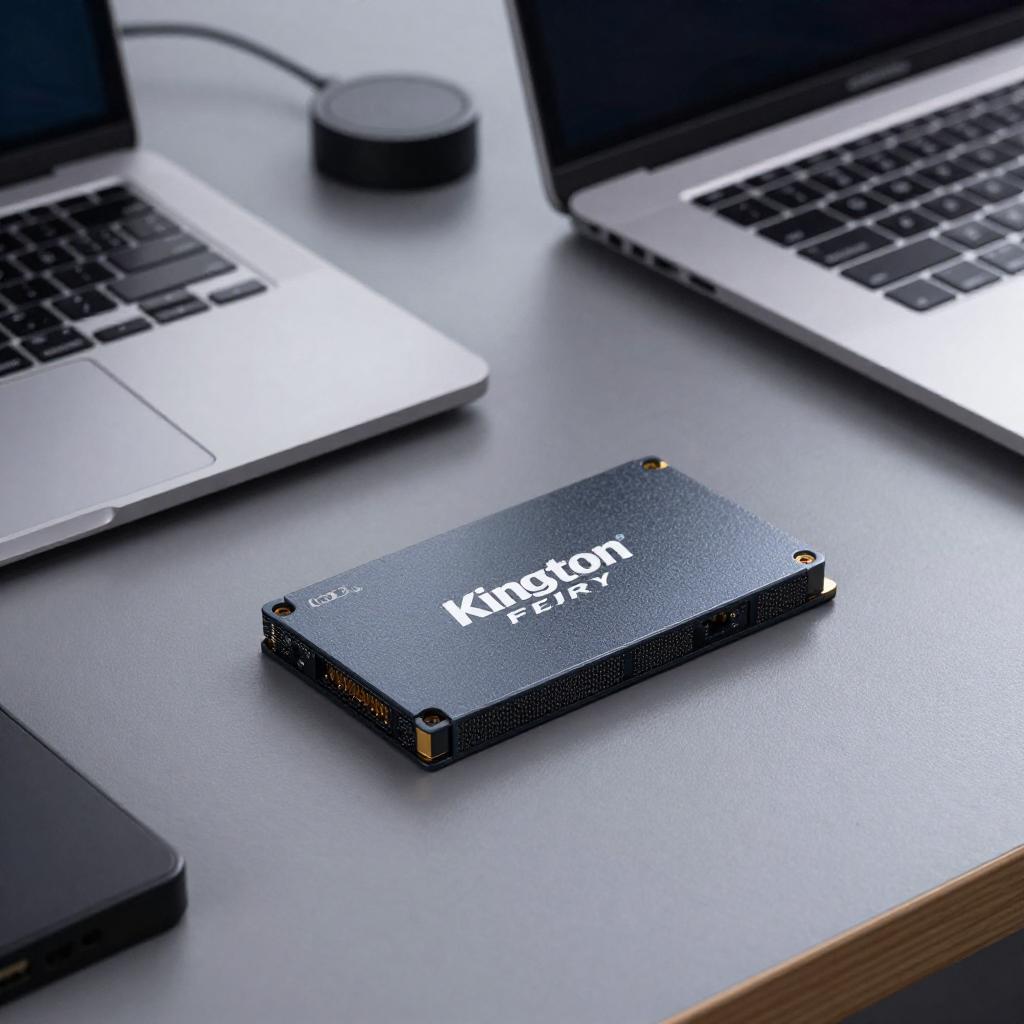
The Kingston Fury Renegade G5 represents Kingston’s first foray into the PCIe Gen 5 SSD market, following the success of their previous Gen 4 drives like the KC3000 and original Fury Renegade. Promising impressive speeds and high endurance, this drive targets enthusiasts seeking cutting-edge storage performance for demanding tasks such as gaming, content creation, and large file handling. Here, we dive into its specifications, real-world performance, thermal management, and pricing to evaluate if the Fury Renegade G5 lives up to Kingston’s reputation.
Specifications and Features
The Fury Renegade G5 is available in capacities ranging from 1TB up to 8TB. Notably, models from 1 to 4TB use a single-sided design, while the larger 8TB model is double-sided. Kingston employs a Silicon Motion SM2508 controller paired with 3D TLC NAND flash; the test model under review features Kioxia BiCS8 NAND, known for balancing performance and endurance effectively.
Performance-wise, Kingston advertises up to 14,800 MB/s sequential read and write speeds with IOPS reaching 2.2 million for random reads and writes. Endurance is rated generously at 1,000 terabytes written (TBW) per terabyte capacity—significantly higher than the 600-700 TBW typical of many Gen 5 SSDs—backed by a 5-year warranty. However, the drive does not come with an active heat sink out of the box, offering only a sticker heat spreader, signaling that users would benefit from adding aftermarket cooling solutions to manage thermal throttling during intense workloads.
Real-World Performance
Benchmarking the Fury Renegade G5 reveals strong results across a range of typical PC tasks and intensive workloads. In PC Mark 10 quick tests, which simulate everyday activities like document handling and gaming load times, the G5 scored impressive average speeds around 982 MB/s, outperforming many Gen 4 predecessors and standing close to contemporaries such as the WD Black SN8100 and Corsair MP700 Pro XT SSD.
When subjected to the full PC Mark 10 suite—a more demanding benchmark simulating heavy application usage—the drive rose to a respectable third place among Gen 5 contenders, illustrating its capability as a solid main drive for professionals and enthusiasts.
In sustained workload consistency tests, the Fury Renegade G5 maintains around 1,000 MB/s transfer speeds even during prolonged stress, outperforming some high-profile rivals such as the MP700 Pro XT. For gaming-focused usage, benchmarks like 3D Mark Storage place the drive fourth, with strong results in load, installation, and update tasks for game libraries.
Sequential read/write speeds also topped charts slightly in write performance, comfortably exceeding PlayStation 5 speed requirements—though PS5 hardware does not currently support PCIe Gen 5 speeds, making this feature more future-proof than immediately practical for console users.
Thermal and Power Considerations
The Silicon Motion SM2508 controller used in the G5 is more efficient than those in many early Gen 5 SSDs, yet it can still generate significant heat under heavy use. Users are advised to fit their drives with dedicated cooling solutions, whether through motherboard heatsinks or third-party heat spreaders, to prevent thermal throttling and maintain consistent performance.
Pricing and Market Position
As a new entrant, the Fury Renegade G5 commands premium pricing typical of early Gen 5 SSDs. In regions like the Netherlands, 2TB models retail for around €240, which is more affordable than the Corsair MP700 Pro XT but still pricier than competitors like the WD SN8100 or Samsung 9100 Pro. The 4TB versions are less competitively priced, though the 8TB Fury Renegade G5 offers attractive value as the cheapest large-capacity Gen 5 SSD currently available at about €840.
Given the limited practical benefits of Gen 5 speeds for most users today—especially for gaming consoles—it is advisable to consider whether the extra cost is justified for your specific use case. For users with heavy data workloads and those seeking future-proofing, the G5’s performance, endurance, and balanced feature set make it a compelling choice if priced competitively in your market.
Conclusion
The Kingston Fury Renegade G5 upholds the brand’s tradition of blending strong performance with decent pricing in the high-end SSD space. While not the absolute fastest Gen 5 drive available, it offers consistent, reliable speeds across a range of benchmarks, excellent endurance ratings, and efficient power consumption. Its somewhat high price will likely soften over time, making it an appealing option for enthusiasts and power users ready to invest in next-gen storage today. Cooling considerations aside, the Fury Renegade G5 is a well-rounded Gen 5 SSD worth strong consideration depending on regional pricing and your performance needs.