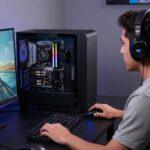
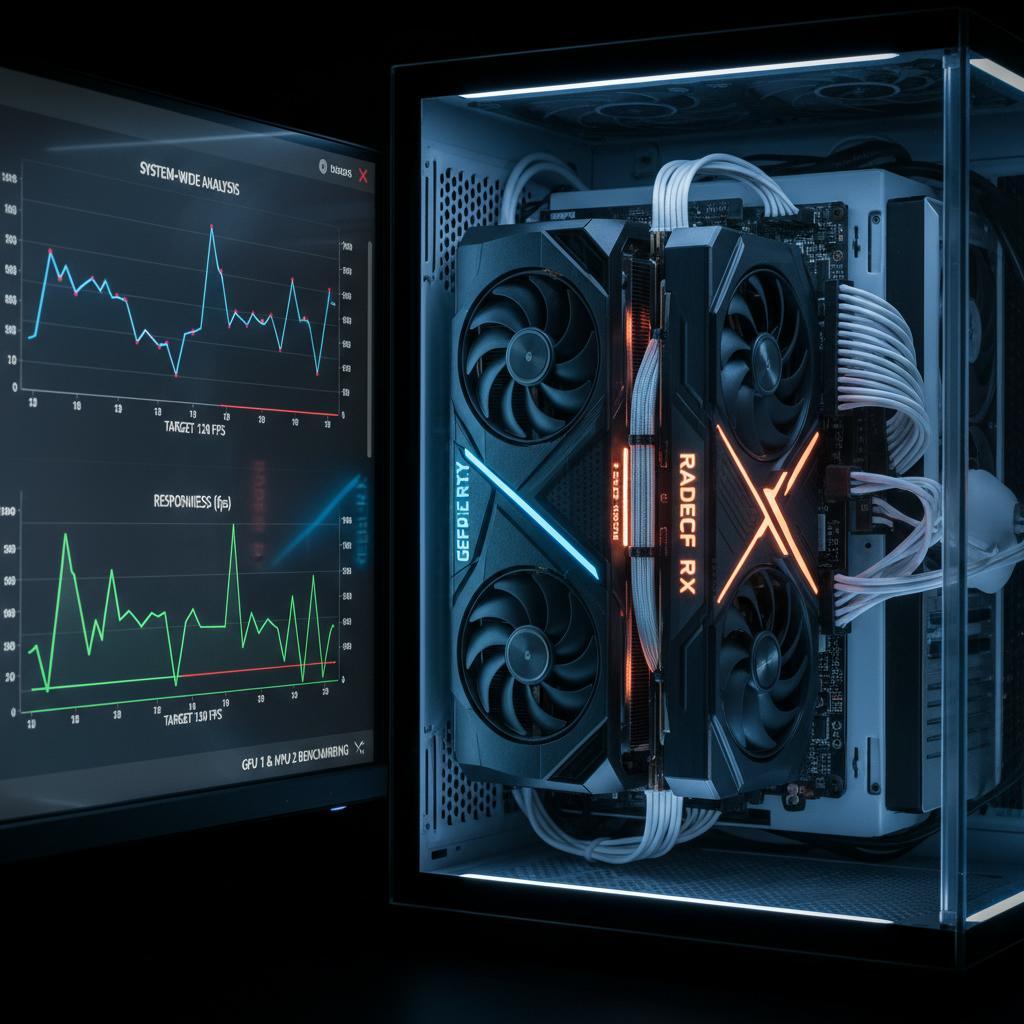
In the evolving world of PC gaming, frame generation technologies have introduced new ways to boost frame rates by creating “fake frames”. While promising higher perceived smoothness, these methods often bring a hidden cost: increased input latency. Recently, a detailed test was conducted using a $7 open-source tool called Lossless Scaling Frame Generation (LSFG) to assess latency impacts in a dual-GPU setup. This comprehensive investigation sheds light on how offloading frame generation to a secondary GPU can enhance performance yet influence game responsiveness.
Understanding Frame Generation and Latency
Frame generation works by interpolating additional frames between fully rendered ones, effectively increasing the frame rate without rendering every frame from scratch. However, this process introduces extra delay because the generated frames represent estimated visual states rather than fresh game logic updates, which means added latency between user input (such as a mouse click) and the corresponding change shown on the screen—the so-called click-to-photon latency.
This latency is crucial because it impacts the player’s real-time interaction feel. Unlike simple frames-per-second (FPS) numbers, latency better captures the immediacy and responsiveness of gameplay. Increased latency can make games feel sluggish or unresponsive even if frame rates are high.
Dual-GPU LSFG Setup: Performance Gains and Latency Costs
In this study, LSFG was tested particularly in a dual-GPU configuration where the secondary GPU shoulders the workload of generating fake frames. For example, pairing an RTX 4060 Ti as the main GPU with an older GTX 1660 Super for frame generation resulted in substantial FPS improvements (from approximately 54 FPS to 70 FPS) while keeping the primary GPU focused on rendering the game scene.
Despite these gains, latency increases were inherent. Tests showed that enabling LSFG at a 2x multiplier roughly doubled latency, moving from baseline values around 17.9 milliseconds (ms) to nearly 29.7 ms. Increasing multipliers to 4x and beyond amplified latency further, sometimes by over 50%, with 20x multipliers pushing latency into unplayable ranges.
Notably, latency impacts can be moderated by capping frame rates. Running tests with a 60 FPS limit reduced latency spikes by preventing GPUs from becoming overwhelmed, although it also limited the upper bound of FPS improvements.
Game-Specific Results and Application Contexts
Latency sensitivity varies by game genre and player expectations. In competitive titles like Rainbow Six Siege or Marvel Rivals, even minor latency increases (several milliseconds) can influence gameplay outcomes and player experience. Here, the baseline latency was impressively low, but adding LSFG at 2x or higher nearly doubled the average latency, potentially affecting competitive play.
Conversely, single-player experiences such as Cyberpunk 2077 and Warhammer 40k Space Marine 2 can tolerate higher latency increases if accompanied by smoother frame delivery and visual enhancements. In these games, LSFG still showed scaling latency but allowed for perceptual fluidity improvements.
Latency Measurement Methodology and Tools
The testing employed an open-source latency testing device developed by Tech Team GB, utilizing an Arduino microcontroller and a silicon photodiode to physically detect screen light changes after input events. This approach bypasses reliance on proprietary vendor tools, providing accurate end-to-end latency measurements from input to display.
Sampling rates around 15 microseconds enable precise detection of frame update times, and tests included multiple GPUs and scaling multipliers applied consistently across several games. Notably, features like Nvidia Reflex, AMD Anti-Lag, or Intel XESS Frame Generation latency reductions were disabled to isolate LSFG’s pure latency impact.
Balancing Tradeoffs and Practical Recommendations
The overarching insight is that frame generation technologies like LSFG offer meaningful frame rate boosts at the cost of increased input latency approximately equal to one extra frame period or more. While this latency increase can be significant in percentage terms, its perceptual impact depends on game type, GPU setup, and personal sensitivity.
Dual-GPU setups help by dedicating one GPU to frame generation, minimizing the performance hit on the main GPU and improving overall frame pacing and consistency. However, using very old or underpowered secondary GPUs can worsen latency due to inability to keep up with frame generation demands.
For gamers and developers considering LSFG or similar frame generation tools, limiting multipliers to 2x or 3x strikes a reasonable balance between smoother visuals and acceptable latency. Frame rate capping further helps maintain manageable latency levels by avoiding GPU overload.
Conclusion: Informed Use of Frame Generation Technologies
Fake frames and frame generation represent a nuanced tool in the quest for higher FPS and smoother gameplay visuals. The recent dual-GPU LSFG latency benchmarks clarify that while the technology can substantially increase frame rates cost-effectively, it inevitably adds latency that may impact responsiveness, especially in competitive scenarios.
Users should weigh the tradeoff carefully, prioritizing lower latency for fast-paced multiplayer games and valuing smoothness improvements in single-player or less latency-sensitive contexts. The open-source nature and affordability of LSFG provide an accessible platform for experimentation and fine-tuning, making it a valuable option in the current GPU landscape.
Ultimately, transparent benchmarking like this helps demystify frame generation’s real-world effects, promoting informed decisions free from marketing hype and revealing the balance between performance gains and player experience.