
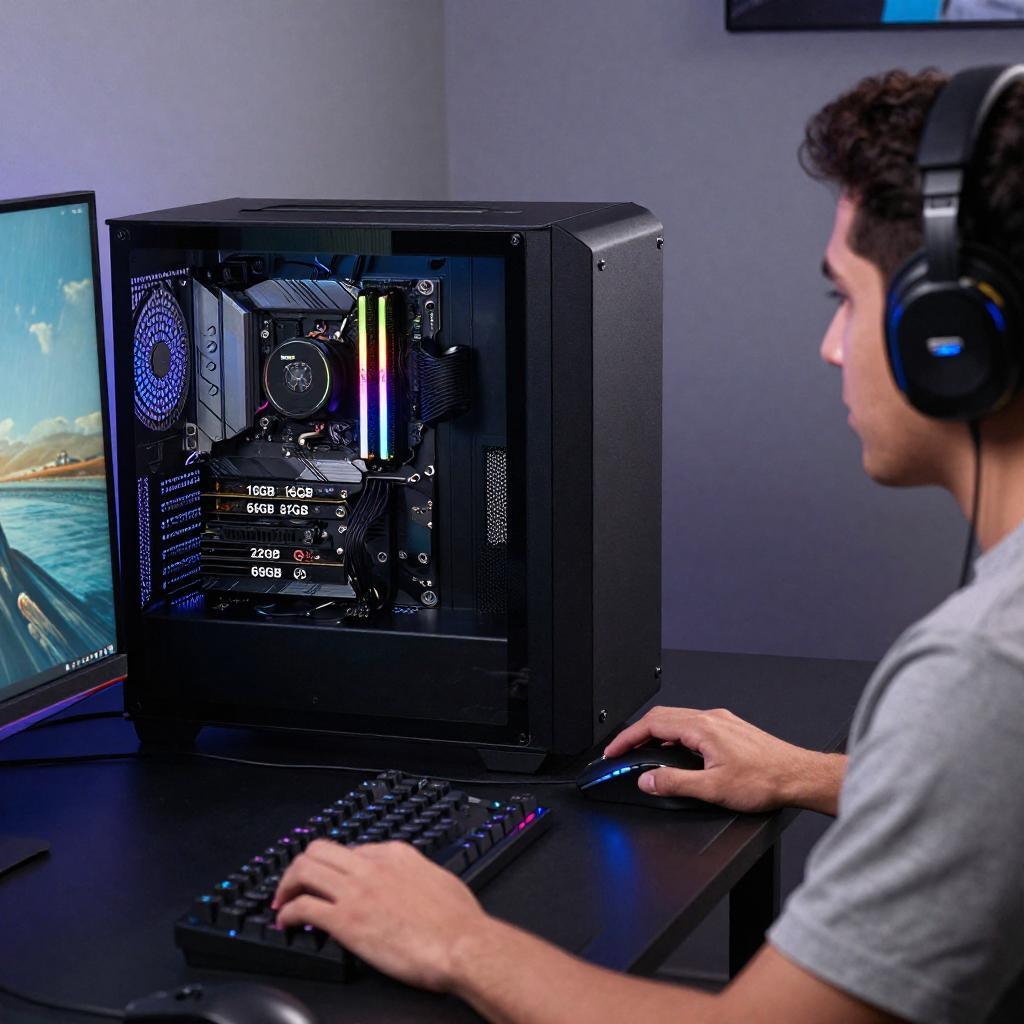
In the evolving landscape of PC gaming, one constant remains: having adequate system memory (RAM) is crucial for a smooth gaming experience. As we progress through 2025, gamers are increasingly wondering how much RAM their systems need, especially considering fluctuating DRAM prices and advancements in game design that demand more resources. This article explores the differences between common gaming RAM setups—16GB (2x8GB), 32GB (2x16GB), and 64GB (2x32GB)—offering insights into what gamers really need today and in the near future.
Current Game Memory Usage and Its Impact
Modern AAA games, combined with the operating system and background applications like browsers and chat software, regularly push system memory usage beyond 16GB. Many contemporary titles function adequately on 16GB; however, limitations start showing when larger open-world games, high-resolution textures, and multitasking come into play. When system memory is insufficient, Windows resorts to using slower storage (the page file), causing stutters and frame time issues that disrupt gameplay.
Testing real-world scenarios, including running multiple tabs in Chrome and apps like Discord alongside games, reveals that 32GB of RAM smoothly accommodates current gaming demands without memory pressure, offering a more future-proof setup. Meanwhile, 64GB is rarely utilized fully by games and is mostly beneficial only for heavy multitasking or professional-level content creation tasks beyond gaming.
Performance Differences: 16GB vs 32GB vs 64GB
Upgrading from 16GB to 32GB often results in tangible improvements in gaming performance consistency. Gamers experience fewer frame drops during intense scenes, smoother asset streaming in vast game worlds, and enhanced multitasking abilities without interrupting gameplay. Games tested at high settings and 4K resolution typically show nearly identical average frame rates across 16GB, 32GB, and even 64GB setups, but 16GB systems may suffer during peak memory demands, causing occasional stutters.
Jumping from 32GB to 64GB, however, generally offers minimal gaming performance gains. Frame rates and smoothness remain largely unchanged in gaming scenarios, making 64GB more of a niche choice for those running resource-heavy non-gaming applications alongside play.
Understanding the Relationship Between VRAM and System RAM
Graphics processing unit (GPU) memory, or VRAM, plays a distinct but complementary role alongside system RAM. If VRAM is limited (notably in GPUs with 8GB VRAM), game assets that would normally reside in VRAM spill over into system RAM. This increases system memory usage and read bandwidth substantially, which can cause degraded frame times and stuttering if system RAM is insufficient.
Conversely, having a high VRAM GPU (12GB or more) paired with only 16GB of system RAM might still create bottlenecks when multitasking or loading background apps, so upgrading to a 32GB RAM kit can provide substantial benefits in experience consistency. The general takeaway is that VRAM and system RAM shortages produce different symptoms, and balanced capacities are critical for a smooth gaming experience, especially at 4K or with high-res textures.
Value Considerations Amid DRAM Pricing Challenges
The fluctuating cost of DRAM in 2025 makes budget considerations vital. While 16GB kits—commonly 2x8GB modules—are more affordable and currently suffice for many games, they carry a higher risk of performance hiccups in demanding titles and multitasking scenarios. On the other hand, 32GB kits (2x16GB) are widely regarded as the sweet spot, balancing price, performance, and future-proofing, especially with DDR5 memory speeds reaching 6000 MT/s.
Purchasing 64GB setups (2x32GB) is significantly more expensive and typically unnecessary unless gaming is just one part of a broader, demanding workload involving video editing, 3D rendering, or virtual machines. For most gamers, investing extra in the GPU or CPU rather than memory beyond 32GB offers better performance-per-dollar.
Practical Recommendations for Gamers in 2025
- For General Gamers (1080p-1440p, AAA, and eSports titles): 32GB DDR5 RAM is recommended for optimal performance and longevity. 16GB is acceptable if budget-constrained but expect the need to upgrade sooner.
- For High-End Gamers and Streamers: 32GB remains ideal to handle gaming alongside streaming and communication applications without bottlenecks.
- For Gamers with Heavy Content Creation or Workstation Use: 64GB may be worth considering, but its benefits apply more to professional workloads than gaming itself.
- For Older DDR4 Systems: Upgrading to 32GB DDR4 still provides advantages over 16GB, though DDR5 offers better future-proofing and performance.
In summary, while 16GB can still get you by in many current titles, especially if you’re mindful about multitasking and game settings, 32GB of fast DDR5 RAM is becoming the standard for a high-quality, uninterrupted gaming experience in 2025. Meanwhile, 64GB is generally reserved for specialized use cases beyond just playing games. Budget-conscious gamers facing high DRAM prices may initially opt for 16GB, but aiming for 32GB when possible will better support gaming and multitasking demands for years to come.