Micron Technology has recently posted unprecedented growth in its data center memory segment, driven largely by booming AI demand. While this surge has tripled the company’s market cap, it has also led to a strategic shift away from consumer memory markets, including gaming enthusiasts, sparking criticism about Micron’s true commitment to gamers. This article explores the financial realities underlying Micron’s recent moves, the impact on gaming RAM prices, and wider industry trends in memory supply and pricing.
Micron’s Record Growth and AI-Fueled Demand
In fiscal year 2025 and into 2026, Micron’s cloud memory and data center segments have experienced explosive growth. The company’s cloud memory business revenue surged by 257% year-over-year, reaching $5.28 billion in the first quarter of fiscal 2026 alone, with gross margins hitting a remarkable 66%. Overall revenue soared to $13.64 billion in Q1 FY26, reflecting a 57% increase compared to the previous year, pushed by the insatiable appetite for High Bandwidth Memory (HBM) and DDR5 used in AI data centers.
This growth is underpinned by the rapid expansion of AI workloads and the buildout of hyperscale cloud infrastructure, notably supported by Micron’s close partnership with Nvidia. The increased demand for AI-capable DRAM has driven Micron to prioritize capital expenditures toward advanced memory solutions optimized for AI performance, rather than consumer-grade memory supply.
Impact on Consumer and Gaming Memory Segments
While Micron’s data center memory business thrives, its consumer and client memory division—which includes Crucial, a popular brand among PC gamers—has seen only minimal revenue growth. Margins in the client segment are rising, a result of elevated memory prices rather than increased sales volume. This reflects a constrained supply of consumer RAM, as manufacturers shift wafer capacity toward high-margin AI-focused memory products.
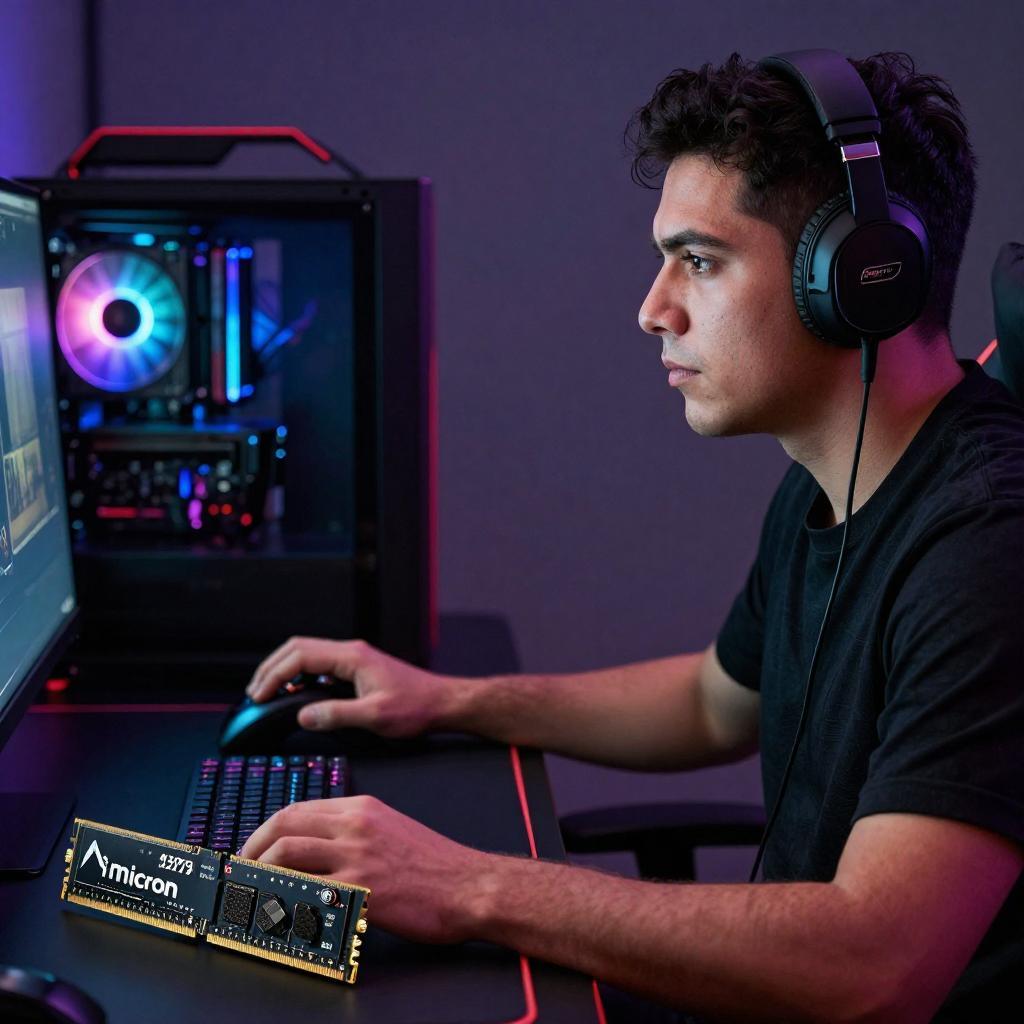
Notably, despite the October 2025 launch of Crucial DDR5 Pro 6400 CL32 overclocking memory, Micron announced the discontinuation of the Crucial brand shortly after—just 43 days later. In that brief interval, Micron explicitly emphasized its “commitment to gamers” in press releases, only to discontinue that consumer-facing product line soon after. This move suggests a deliberate pivot away from serving gaming consumers, prioritizing the more lucrative AI and data center markets.
Memory Supply Constraints and Rising Prices
Industry reports forecast that PC pricing will climb, driven largely by memory supply realignments favoring data centers. IDC projects an 8% increase in completed PC prices by 2026, while PC sales volume is expected to contract by up to 8.9%. Manufacturers and system integrators are reacting to the RAM shortage by introducing solutions like “RAMless” PCs, allowing customers to bring their own memory to offset inflated component costs.
Analyst firms like Tech Insights argue that the current cycle deviates from past trends where memory prices cyclically decline. Instead, due to sustained high demand from AI workloads and disciplined supply increases by Micron and other major suppliers (Samsung and SK Hynix), elevated prices are expected to persist longer. This has serious implications for both casual and enthusiast consumers who face considerably higher prices for memory kits, sometimes doubling or more within months.
Broader Industry Implications and Consumer Impact
The shift toward AI-driven memory demand is not isolated to Micron but is reshaping the entire semiconductor landscape. The three major DRAM manufacturers control the majority of global supply, and their strategic allocation of wafer capacity favors cloud and AI applications over consumer electronics. This scarcity increases prices across PC, gaming, and smartphone markets.
Consequently, specifications in mid-range devices may regress, leading to “shrinkflation,” where consumers pay more for lower-grade memory capacity. Gaming enthusiasts and professional workstation users are particularly affected, with high-capacity kits costing unprecedented amounts, making new builds or upgrades prohibitively expensive.
From Consumer Commitment to AI Capitalization
Historically, Micron showed stronger alignment with the gaming community, investing in partnerships and advertising targeted at PC enthusiasts. Today, that narrative has shifted dramatically. The company’s strategic decisions demonstrate prioritization of stock price growth through the AI infrastructure boom rather than supporting consumer memory needs.
Micron’s discontinuation of Crucial shortly after heralding its new high-performance gaming memory reflects an active choice to focus on maximized profitability from data center sales. This is incentivized by government incentives, tax breaks, and alignment with massive AI investment cycles. Unfortunately, this comes at the expense of consumer affordability and choice, resulting in a marketplace characterized by higher prices and constrained availability.
Conclusion
Micron’s record-breaking revenue growth in AI and data center memory confirms the strategic shift dominating the semiconductor market: prioritizing AI infrastructure over consumer needs. This realignment has caused sharp increases in consumer memory prices, reduced availability, and the discontinuation of previously championed gaming brands like Crucial. While Micron publicly touted its “commitment” to gamers mere weeks before killing the Crucial brand, the reality is a clear business choice focused on higher margins and AI-driven demand.
Gamers and PC builders face mounting challenges as memory prices remain elevated and supply remains tight. Until alternative suppliers or industry dynamics shift, the consumer segment must contend with an AI-influenced market that prioritizes profitable enterprise memory over the needs of enthusiasts and everyday users.