
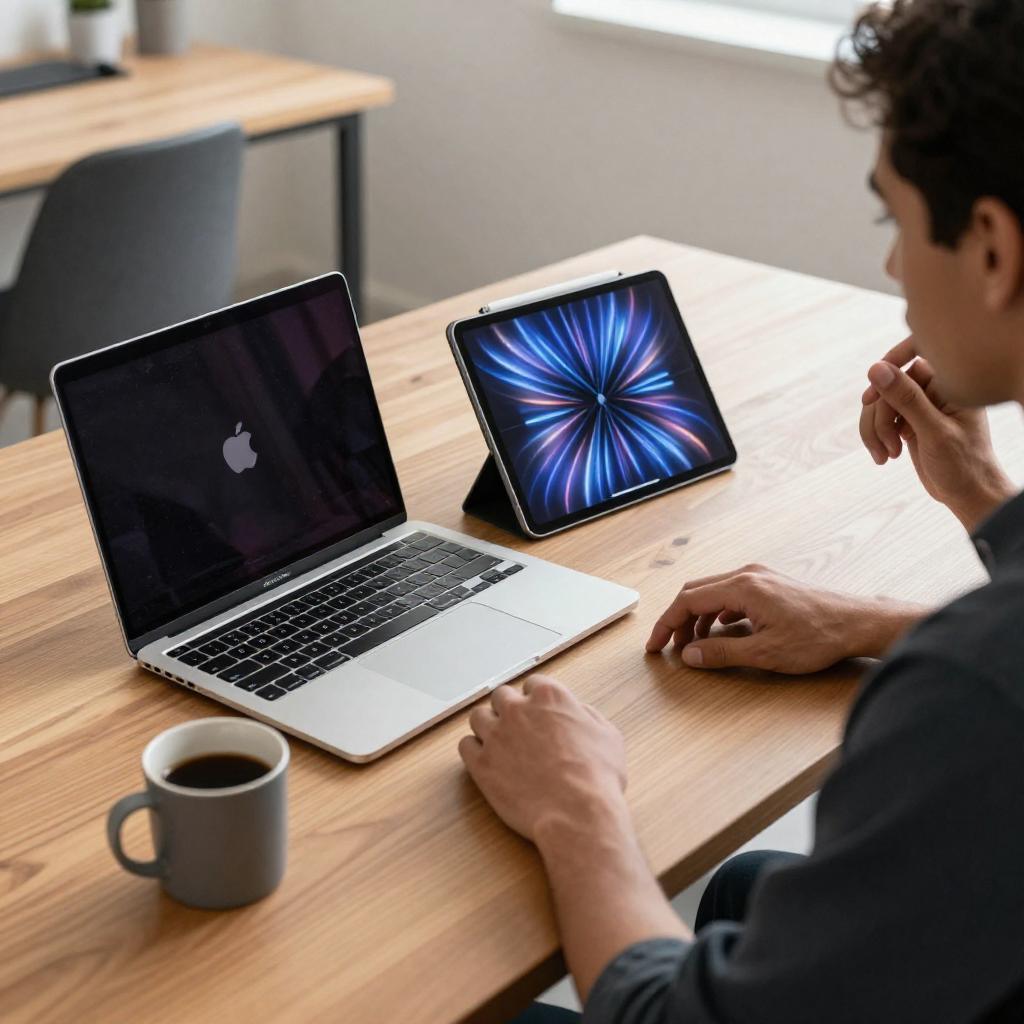
Apple’s fifth-generation in-house silicon, the M5 chip, powers the 14-inch MacBook Pro and the 11-inch iPad Pro 2025, marking a significant leap in performance and efficiency that once again challenges the dominance of Windows-based laptops with Intel, AMD, and Qualcomm chips. Our hands-on testing reveals how these devices stack up in raw power, usability, and value — painting a complex picture of impressive capability but also premium pricing that demands careful consideration.
Breaking Down the New Silicon Powerhouse
The MacBook Pro 14 M5 showcases a 10-core design, with four high-performance cores paired with six efficiency cores, supported by 32GB of DDR5 RAM and a 1TB SSD. Meanwhile, the iPad Pro 11 features a slightly reduced 9-core M5 variant, but still delivers top-tier speed complimented by 16GB of RAM and 1TB of storage, further augmented by Apple’s premium accessories like the pen and keyboard cover.
Both devices retain familiar chassis and display technologies from previous models — the MacBook Pro features a 120Hz miniLED display with a new matte coating that mitigates reflections, ideal for on-the-go users, while the iPad Pro boasts a stunning OLED screen that excels in both color fidelity and brightness, making it arguably one of the best mobile displays available.
Performance: M5 Silicon Versus the Competition
The M5 chip delivers remarkable single-core performance, currently considered the fastest CPU core available on the market, effortlessly outpacing many Intel, AMD, and Qualcomm processors, all while maintaining power efficiency. The MacBook Pro’s active cooling allows it to sustain higher multi-core performance for longer periods, making it better suited for intensive workloads compared to the passively cooled iPad Pro, which throttles sooner during prolonged heavy use.
GPU improvements are equally notable, with an estimated 25-30% performance boost over the previous M4 generation in synthetic tests. The MacBook Pro again leads with superior GPU performance, managing higher frame rates and better thermal handling during gaming or graphic-intensive tasks, though both devices benefit from Apple’s sophisticated upscaling technologies and game optimization efforts. Gaming performance rivals many integrated GPUs on Windows laptops, but native game availability remains limited.
User Experience and Workflow Realities
From a usability standpoint, the MacBook Pro 14 M5 offers a near-seamless transition for users accustomed to Windows or full desktop environments. MacOS supports professional-grade applications, virtualization, and multitasking with precision, supported by robust external display and peripheral integration.
The iPad Pro 11 M5 has evolved closer to a laptop experience thanks to iPadOS 26’s enhanced multitasking and pro features, making it a powerful tool for artists and creatives who leverage the Apple Pencil and touch interface. However, it still lacks the full desktop operating system flexibility required for more complex workflows, which can be a limiting factor for users who demand traditional file management, extensive multitasking, or specialized software only available on macOS or Windows.
Value and Pricing: A Subjective Balance
While Apple delivers a top-tier user experience and industry-leading silicon performance, this comes at a steep cost. The MacBook Pro’s configurations rival the price of Windows laptops equipped with RTX 5070 class GPUs, and the iPad Pro, with all accessories, approaches the cost of premium 13-14 inch gaming laptops. For Windows users accustomed to affordability and upgrade options, this premium may appear hard to justify.
Ultimately, the value proposition depends heavily on existing ecosystem investment and intended use. Those deeply embedded in Apple’s ecosystem benefit from seamless integration and optimized software, while others may find better cost-to-performance ratios elsewhere.
Conclusion: Cutting-Edge Performance Meets Premium Pricing
Apple’s M5-powered MacBook Pro 14 and iPad Pro 11 push the boundaries of what mobile silicon can do, establishing new standards for power efficiency, single-core speed, and integrated graphics performance. The MacBook Pro, with its sustained performance and macOS versatility, stands as a compelling alternative to Windows ultrabooks for professional workloads. The iPad Pro continues to blur the lines between tablets and laptops, especially for creatives, but still faces inherent OS constraints.
However, the premium price tags cast shadows on their value proposition, especially when competitive Windows laptops offer similar or better hardware specs for a wide range of budgets. For prospective buyers, the decision comes down to priorities: whether seamless high-end performance and ecosystem cohesion justify the cost, or if alternative platforms meet their needs more economically.