
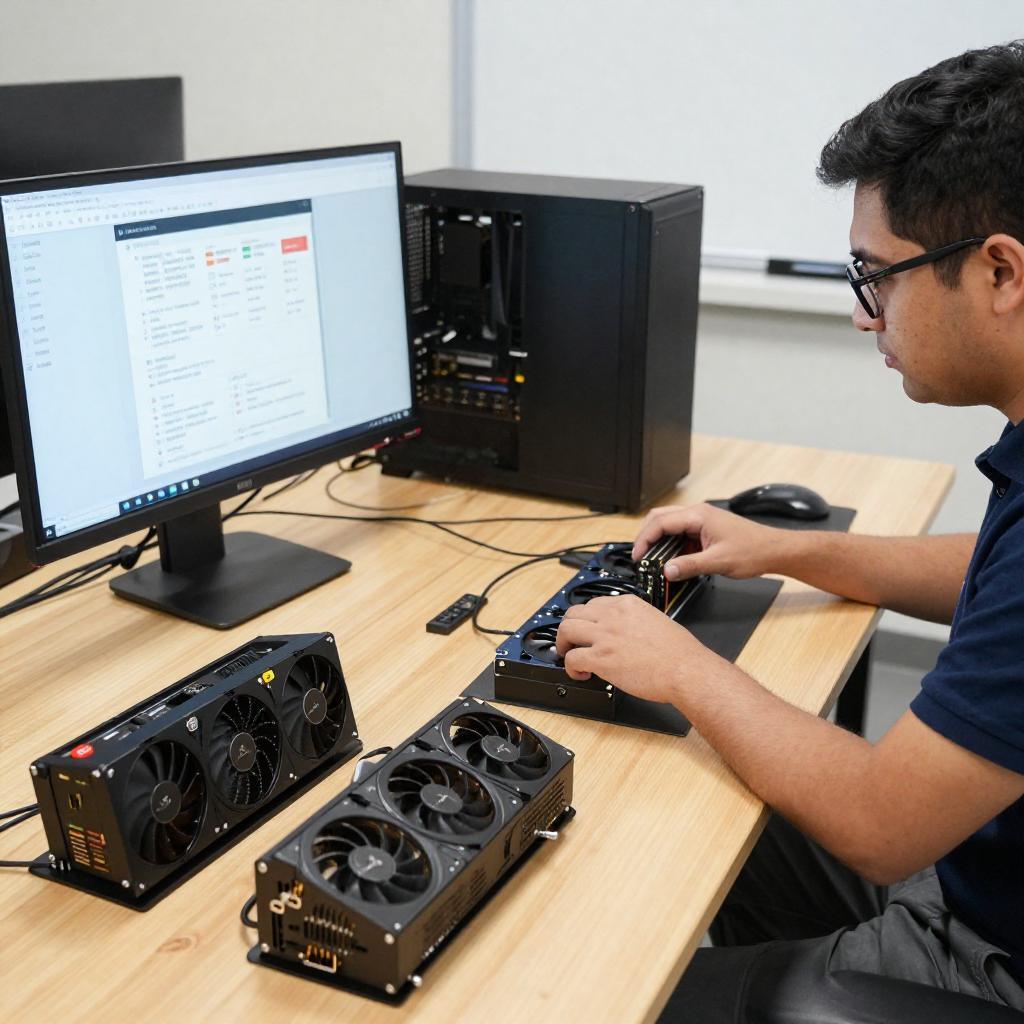
As the graphics card market braces for a potential VRAM shortage in 2026 due to rising DRAM prices, gamers seeking budget-friendly options under $300 face tough choices. Currently, three primary GPUs fit this price bracket: Nvidia’s GeForce RTX 5060, AMD’s Radeon RX 960 XT 8 GB, and Intel’s ARC B580. This article examines how these models perform in real-world gaming scenarios, exploring their capabilities, limitations, and suitability for 1080p gaming with modern titles.
Understanding the VRAM Bottleneck
VRAM capacity is increasingly a critical factor in gaming performance. Most new titles at 1080p demand more than 8 GB of VRAM, pushing lower-end GPUs with 8 GB into compromises, often requiring reduced graphic settings to avoid stuttering or texture issues. Both the Radeon RX 960 XT and the GeForce RTX 5060 come with 8 GB VRAM and deliver strong raw GPU power, but their ability to handle ultra or higher presets diminishes as VRAM limits are hit.
The Intel ARC B580, with 12 GB VRAM, avoids this limitation, allowing higher settings and even playable 1440p gaming. However, it generally has lower GPU processing power than the AMD and Nvidia counterparts, resulting in lower frame rates at 1080p in many games.
Performance Comparison Across Popular Games
Benchmarking these three cards across 19 modern games reveals nuanced outcomes:
- Radeon RX 960 XT 8 GB: Generally the fastest among the budget trio, especially at settings confined within 8 GB VRAM limits. It frequently outpaces the RTX 5060 by about 4-5% and delivers particularly strong 1% low frame rates, translating to smoother gameplay.
- GeForce RTX 5060: A close competitor to the Radeon card with similar performance margins. It benefits significantly from superior upscaling technology (DLSS 4), which improves frame rates and image quality. Nvidia’s broader DLSS support gives this GPU an edge for gamers wanting smoother visuals and performance.
- Intel ARC B580: While the slowest at 1080p native resolutions (averaging around 20-30% lower FPS than its rivals at comparable settings), its 12 GB VRAM allows ultra presets and higher resolutions not feasible on the 8 GB cards. Intel’s XESS upscaling quality, however, is less refined than Nvidia’s and AMD’s competing technologies.
Some notable game-specific results:
- Ghost of Tsushima: The B580 edges slightly ahead, showcasing its strength at very high settings.
- Spider-Man 2 and Mafia: The Old Country: Intel’s B580 falls notably behind, even at medium presets.
- Call of Duty: Black Ops 7: The 9060 XT shines with a significant performance lead, a known Radeon advantage in Call of Duty titles.
- Cyberpunk 2077: All three GPUs manage playable frame rates at ultra presets within VRAM limits, with minor differences in performance.
Upscaling Technologies: DLSS4, FSR4, and XESS
Each GPU leverages its brand’s exclusive upscaling tech: Nvidia’s DLSS4, AMD’s FSR4, and Intel’s XESS. Upscaling can substantially boost frame rates by rendering scenes at lower internal resolutions before upscaling to display resolution with AI or algorithmic enhancements.
DLSS4 generally offers the highest image quality and broadest game compatibility, giving Nvidia cards an edge. AMD’s FSR4 performs similarly well, especially at quality and balanced modes. Intel’s XESS, while improving performance and visuals, often provides a less crisp image compared to DLSS4 and FSR4, slightly diminishing the overall experience despite VRAM advantages.
What Settings are Achievable on 8 GB VRAM GPUs?
With only 8 GB of VRAM, players are realistically limited to medium or high quality presets at 1080p to avoid texture streaming issues and stutter. Games like Ratchet & Clank: Rift Apart or Assassin’s Creed Shadows demand medium settings on 8 GB cards for smooth gameplay. Attempting ultra or very high presets commonly results in performance drops or in-game warnings.
The Intel ARC B580’s 12 GB VRAM allows for considerably higher presets and even some higher resolutions, but its slower GPU core means players often trade FPS for visual fidelity.
Conclusion: Choosing the Right Budget GPU for 2026
For gamers targeting sub-$300 GPUs in 2026 under looming VRAM constraints, choices hinge on balancing VRAM capacity against pure GPU performance:
- If VRAM limits and higher settings are priorities—especially for ultra presets or 1440p gaming—the Intel ARC B580 is the better fit despite lower FPS at native 1080p.
- If raw performance and smoother gameplay at 1080p medium to high settings matter more, the AMD Radeon RX 960 XT 8 GB and Nvidia GeForce RTX 5060 stand out, with the Nvidia card’s DLSS4 offering a slightly better ecosystem and image quality in supported games.
However, VRAM limitations will increasingly restrict 8 GB models’ longevity as future games demand more memory. The 12 GB ARC B580 may age better in this regard but starts off with performance compromises.
For those who can, stretching the budget toward GPUs with at least 16 GB of VRAM would provide a more future-proof and versatile gaming experience. Sadly, current memory market trends indicate that affordable GPUs with ample VRAM may remain scarce through 2026.
In summary, the 2026 affordable GPU landscape presents compromises: gamers must weigh VRAM capacity against GPU power and select based on their preferred balance of visual quality, resolution, and frame-rate targets.