
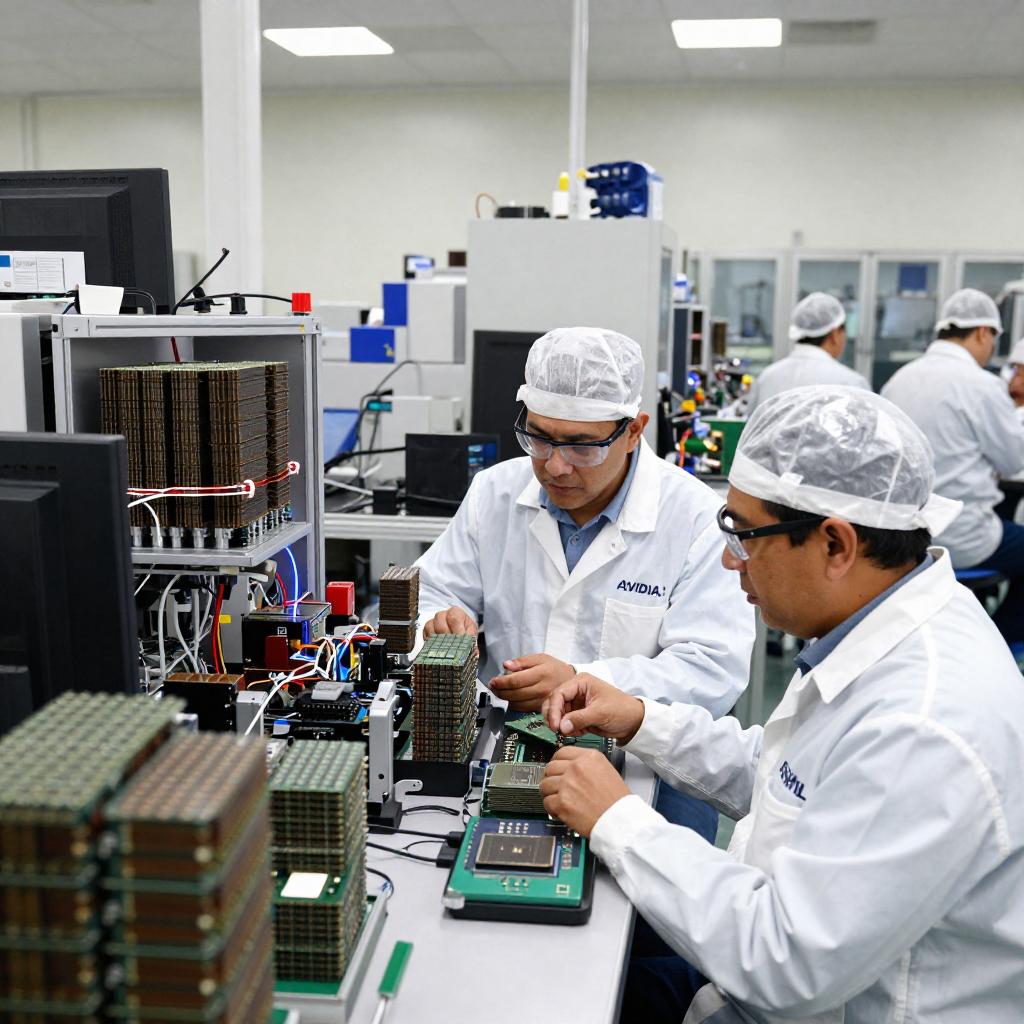
In recent years, consumers have witnessed a steady increase in computer hardware prices, particularly in graphics cards. Behind this trend lies a complex interplay of market dynamics, technological monopolies, and supply chain constraints that extend far beyond simple product demand. Central to this discussion are Nvidia, the dominant GPU designer; TSMC, the leading semiconductor fabrication powerhouse; and ASML, the sole provider of cutting-edge lithography machines essential for manufacturing modern chips. Together, they demonstrate why hardware prices have soared and why relief may not arrive anytime soon.
Nvidia’s Dominance in the GPU Market
Nvidia has steadily tightened its grip on the discrete GPU market over the last two decades, capturing around 92% market share. While not a legal monopoly, this near-total control enables Nvidia to price its GPUs with little competitive pressure. For instance, Nvidia’s flagship consumer graphics cards that once cost around $500 in 2010 now routinely sell for $2,000 or more, especially with premium versions pushing prices higher. Despite consumer frustrations and vocal discontent online, competitors like AMD have shrunk to a minor 7% share, with Intel only recently edging into GPU space after years of struggle. Without strong alternatives, Nvidia’s pricing power remains robust.
TSMC: The Fabrication Giant Behind the Scenes
Neither Nvidia nor its competitors actually manufacture the chips they design. Instead, they rely heavily on Taiwan Semiconductor Manufacturing Company (TSMC), which dominates advanced semiconductor fabrication worldwide. TSMC’s unique position stems from decades of investment and a business model that avoids competing directly with its customers. By serving as a neutral foundry, TSMC has accrued immense volume and expertise, particularly in cutting-edge manufacturing processes like extreme ultraviolet (EUV) lithography.
TSMC’s fabrication capacity is currently under immense strain due to surging demand from AI data centers, cloud computing, and consumer electronics. The scarcity of wafers—large silicon discs used to make chips—has pushed prices up further. Even as Samsung and other competitors attempt to keep pace, TSMC remains the most viable manufacturer for the highest-performance chips, giving it significant pricing leverage.
ASML’s High-Cost Lithography Machines
At an even higher tier of the supply chain sits ASML, a Dutch company that makes the highly specialized EUV lithography machines necessary for producing the most advanced semiconductor chips. These machines come with price tags around $200 million each, and ASML essentially holds a pure monopoly in this niche. The company’s development of EUV technology, which uses extreme ultraviolet light to etch nanoscale patterns onto silicon wafers, has revolutionized chip production but also created massive barriers to entry for competitors.
The steep cost of these machines and ASML’s exclusive control directly impacts fabs like TSMC, who must invest billions to stay at the technological forefront. Higher manufacturing costs inevitably trickle down through the supply chain, contributing to increased prices for end-user products such as GPUs.
Supply Chain Complexity and Market Implications
This layered monopoly situation—from Nvidia’s market control, TSMC’s fabrication dominance, to ASML’s machine monopoly—creates limited competition that could otherwise moderate prices. Investments required to build new fabrication plants run into billions and take years, while advanced manufacturing expertise is tightly held. Additionally, geopolitical factors and limited alternative supply chains, such as those in China restricted by technological bans, constrain diversification.
The burgeoning artificial intelligence boom has further strained supply, with increased demand for large amounts of specialized memory and chip capacity. Even components like VRAM and DRAM have seen price surges due to high-volume bookings by AI and cloud providers, pressuring GPU costs upward.
Looking Ahead: Will Prices Ever Fall?
While competitors like Intel are making significant investments in advanced manufacturing equipment, tangible results are years away. Chinese fabs are developing alternative methods without EUV technology, but it remains uncertain if these can compete at the same performance and scale. For most consumers, the current scenario means GPU prices will likely remain elevated or increase further before any substantial easing occurs.
Ultimately, the high costs affiliated with designing, manufacturing, and fabricating cutting-edge chips—combined with limited competition and soaring demand—explain why hardware prices, especially GPUs, continue their upward trajectory. Understanding these interconnected factors sheds light on the complex economics shaping the technology we rely on.
Sources: Recent industry analyses, supply chain reports, and market studies on Nvidia’s market share, TSMC’s fabrication role, and ASML’s EUV technology contributions.